You don't decide to pick up your phone. That's the strange part.
If you watch closely — and watching closely is most of the work — you'll notice the hand is already moving by the time the thought arrives. Just check. But check what? There's rarely an answer. The reaching comes first; the reason, if it shows up at all, arrives late and out of breath, inventing a justification for something already underway.
This is what years of practice build: not a habit you perform, but a reflex that performs you.
So we start somewhere smaller than willpower. We start with a gap.
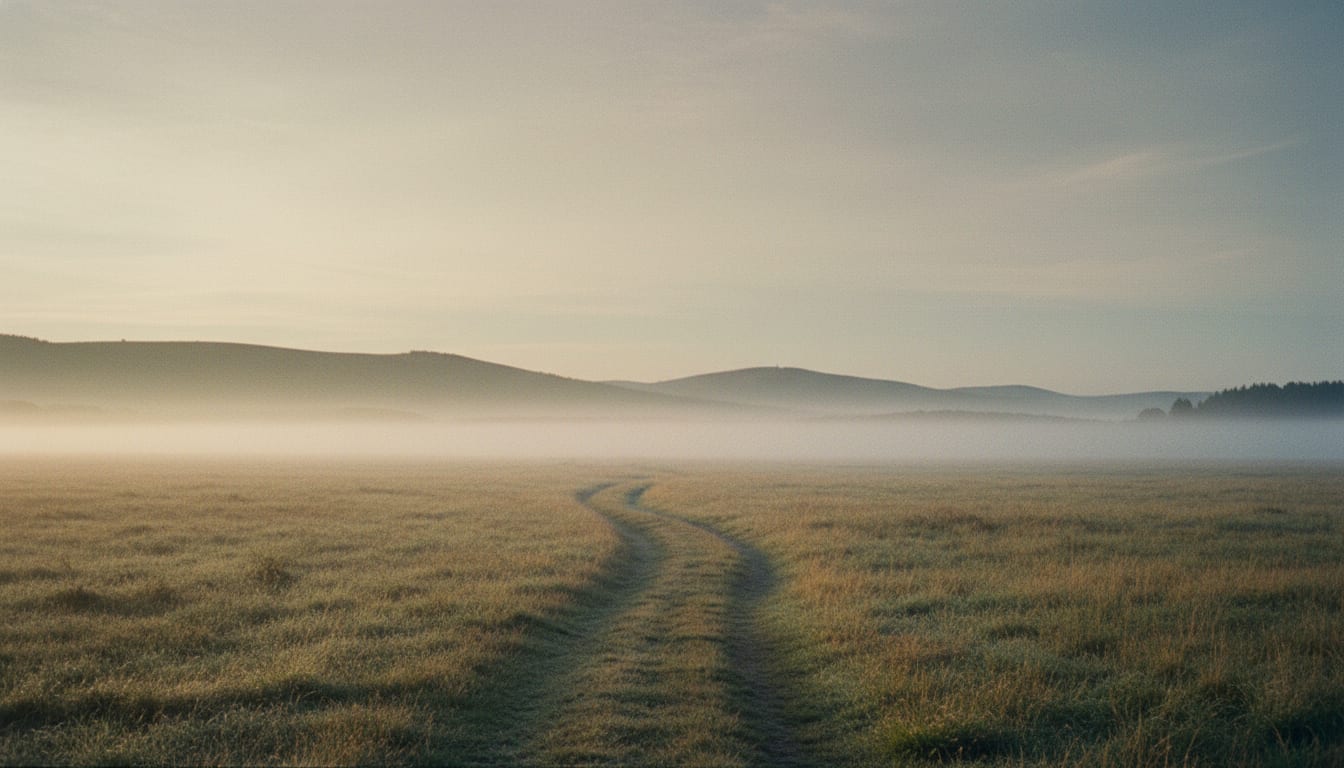
Between the impulse and the action there is a space. It is brief — a half-second, maybe less — but it is real, and it is yours. In that space nothing has happened yet. The hand has not moved. The screen is still dark. You are, for one suspended moment, simply a person who could reach for their phone, and has not.
Most of us have never visited that space. We pass through it the way you pass through a doorway in your own house — too familiar to see. The aim of today is not to do anything heroic inside the gap. It is only to notice the gap exists.
Here is how it tends to go.
You'll be standing at a kitchen counter, or waiting for a kettle, or sitting in the small silence after someone stops talking. The pull will rise — that familiar lean toward the rectangle. And because you've been watching for it, this time you'll catch it a beat early. There it is, you'll think. The reach.
And then, almost certainly, you'll reach anyway.
Good. That's fine. Noticing is not the same as stopping, and on the first day noticing is the entire victory. You are not trying to win the gap. You are trying to remember that it's there — that there was a moment, however thin, when the choice was still open.
What changes, over a week of this, is not your phone use. Not at first. What changes is the felt sense that you are choosing — that the reach is an act you perform rather than a current you're carried by. The phone stops being weather that happens to you and becomes, slowly, a door you open.
That's the beginning of the whole thing. Not deleting the apps. Not white-knuckling through the evening. Just one breath, slipped into a place that used to have none, until the gap is wide enough to stand in.
You found it today. That's enough for today.